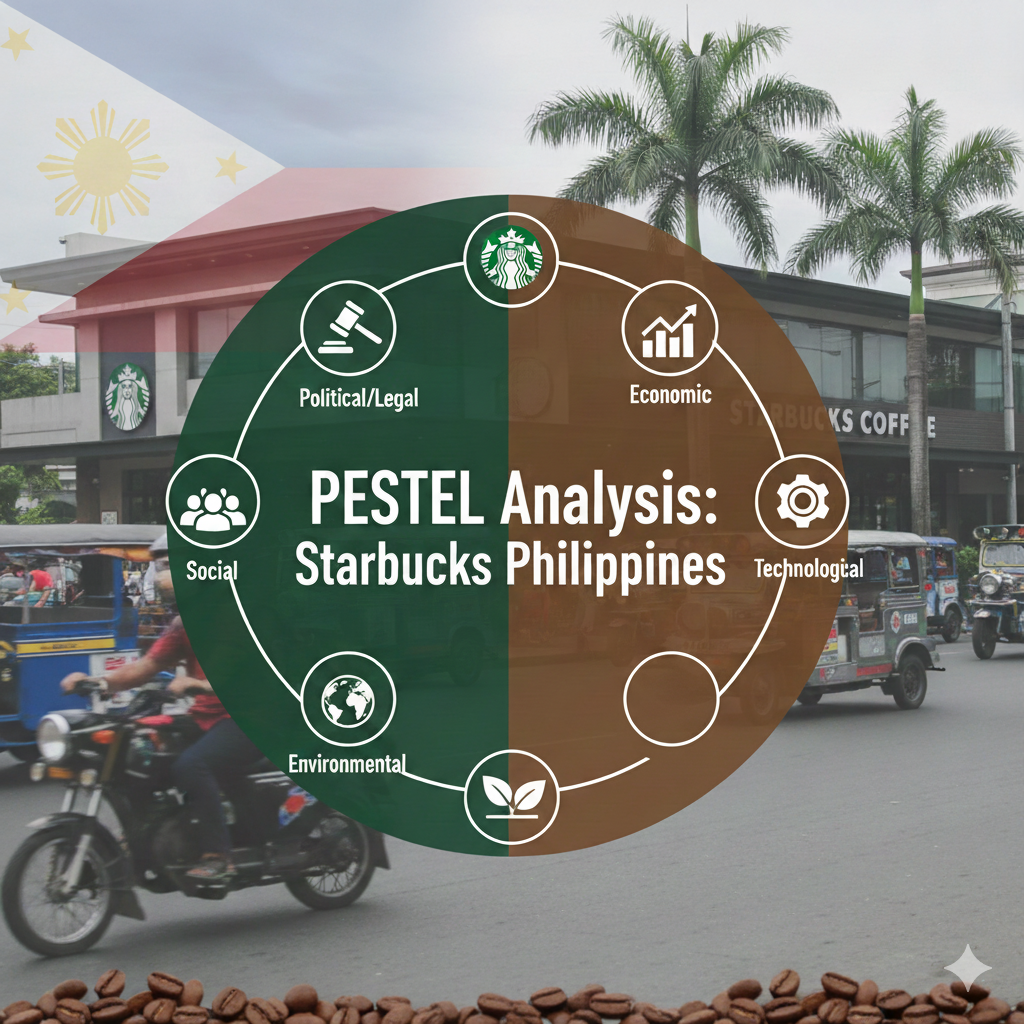
Summary of PESTEL Analysis of Starbucks in Philippines
Starbucks in the Philippines operates within a diverse and fast-changing environment shaped by political, economic, social, technological, environmental, and legal influences. Politically, Starbucks must navigate government regulations, permits, food safety standards, and labor policies that shape how its stores operate and expand across the country. Economically, the brand benefits from rising disposable income, urbanization, and the growth of the middle class, but it must also manage inflation, fluctuating exchange rates, high rental costs, and strong competition from local cafés.
Socially, Starbucks thrives due to the Philippines’ strong café culture, youthful population, and increasing interest in lifestyle-oriented brands. Filipino consumers’ preferences for sweet flavors, social spaces, and digital trends heavily influence Starbucks’ menu and customer experience. Technologically, the company leverages digital payments, mobile apps, delivery platforms, and data analytics to improve service, convenience, and engagement in a market known for its high social media use and mobile adoption.
Environmentally, Starbucks must adapt to the Philippines’ climate risks, plastic restrictions, sustainability expectations, and public awareness of ecological issues. This requires responsible sourcing, waste reduction, and greener store operations. Legally, Starbucks must comply with strict labor laws, food safety regulations, franchising rules, tax requirements, and data privacy standards, all of which shape daily operations and long-term strategies.
Political Factors Affecting Starbucks in the Philippines
Starbucks operates in a highly regulated and politically dynamic environment in the Philippines. Government policies, trade regulations, taxation, labor rules, and the country’s overall governance influence how Starbucks sources products, operates stores, and plans for long-term business growth. Each political factor plays a significant role in determining Starbucks’ market strategy, cost structure, and ability to expand within the Philippine food and beverage sector.
1. Government Stability and Policy Direction
The Philippines has a relatively stable government, but policy direction can shift significantly with each new administration. Changes in national priorities—such as investment policies, tax reforms, or economic development programs—directly influence the business environment.
- Stable periods create opportunities for Starbucks to expand store presence, especially in economic zones and commercial centers.
- Sudden policy shifts, such as stricter business regulations or new investment rules, require Starbucks to adjust operations quickly to remain compliant.
2. Foreign Investment Regulations
Starbucks, as a global brand, operates in the Philippines through partnerships with licensed operators such as Rustan Coffee Corporation. Foreign investment laws influence these partnerships.
- The government’s openness to foreign brands has allowed Starbucks to grow nationwide.
- Any amendments to foreign ownership limits, franchising policies, or retail trade regulations may affect how Starbucks structures its expansion and ownership model.
3. Trade Agreements and Import Policies
Starbucks relies heavily on imported coffee beans, equipment, and specific raw materials.
- Trade agreements between the Philippines and coffee-producing nations determine import costs and availability.
- Import tariffs, customs procedures, and documentary requirements influence Starbucks’ supply chain efficiency.
- Delays in port processing or changes in tariff schedules can increase logistical costs and affect product pricing.
4. Taxation and Fiscal Policies
Changes in the Philippine tax system, especially the TRAIN Law and succeeding tax reforms, directly impact Starbucks’ pricing, profitability, and cost structure.
- Increased excise taxes or VAT adjustments raise operating expenses.
- Corporate income tax reforms affect profitability and expansion decisions.
- Starbucks must continually review local tax rules to maintain compliance and avoid disruptions.
5. Labor Laws and Employment Regulations
The Philippines enforces strict labor standards covering wages, benefits, working conditions, and employment contracts.
- Minimum wage increases directly raise Starbucks’ staffing costs.
- Mandatory benefits such as 13th-month pay, SSS, PhilHealth, and Pag-IBIG contributions influence operational budgets.
- Compliance with DOLE (Department of Labor and Employment) regulations ensures employee welfare but increases administrative requirements.
6. Local Government Regulations and Permits
Local governments hold significant power over business permits, store construction, zoning regulations, and regulatory compliance.
- Each Starbucks branch must secure multiple permits such as business clearances, sanitation certificates, fire safety permits, and environmental compliance documents.
- LGU-level differences in fees, lead times, and inspection procedures can affect store rollout speed and expansion strategies.
7. Food Safety and Quality Standards
The Food and Drug Administration (FDA) and the Department of Agriculture regulate food safety and product standards.
- Starbucks must follow strict guidelines for ingredient sourcing, product labeling, sanitation, and storage.
- New food-safety policies require continuous updates in store operations and staff training.
8. Environmental and Sustainability Regulations
Government efforts to reduce plastic waste and promote sustainability impact Starbucks’ packaging and store operations.
- Policies against single-use plastics require Starbucks to introduce eco-friendly cups, straws, and packaging.
- Environmental compliance certificates are required for store construction, waste management, and water usage.
- Starbucks must align with national and local sustainability rules to maintain operational approval and positive public perception.
9. Public Health Policies (Post-Pandemic Measures)
COVID-19 changed regulatory expectations in the food and beverage industry.
- Starbucks must comply with DOH guidelines, sanitation measures, contactless service requirements, and digital contact tracing systems.
- Public health directives influence store layouts, dining capacity, and operating hours.
10. Political Activism and Public Sentiment
Public sentiment toward foreign brands can be influenced by political issues, international relations, or nationalistic movements.
- Calls for boycotts during political controversies may affect customer behavior.
- Starbucks must remain neutral and maintain strong community relationships to protect its brand image.
11. Infrastructure Policies and Urban Development
Government programs that improve transportation, commercial zoning, and digital connectivity support Starbucks’ long-term growth.
- New malls, business districts, and transit developments create expansion opportunities.
- Poor infrastructure planning or delays can hinder supply chain logistics and store accessibility.
12. Anti-Competition and Consumer Protection Laws
Regulators monitor pricing practices, advertising, and consumer rights.
- Starbucks must ensure transparent marketing, fair pricing, and ethical business practices.
- Non-compliance with consumer protection laws can result in penalties, fines, or reputation damage.
Economic Factors Affecting Starbucks in the Philippines
Starbucks’ performance and long-term growth in the Philippines are deeply shaped by the country’s economic environment. Economic stability, consumer purchasing power, inflation, labor costs, and supply chain conditions all influence how Starbucks prices its products, chooses store locations, manages operations, and develops strategies. Understanding these economic factors is essential for Starbucks to remain competitive in a diverse and fast-growing Philippine market.
1. Overall Economic Stability and Market Growth
The Philippines has experienced steady economic growth over the past decade, driven by services, remittances, and expanding consumer markets.
- Strong GDP growth supports higher consumer spending, which benefits premium brands like Starbucks.
- However, economic slowdowns caused by global events, natural disasters, or geopolitical issues can reduce discretionary spending and affect Starbucks’ sales.
2. Consumer Income Levels and Purchasing Power
Starbucks is positioned as a premium coffee brand in a country where income levels vary significantly.
- Middle- and upper-income consumers in urban areas can afford Starbucks regularly.
- However, a large portion of the population remains price-sensitive, making daily Starbucks purchases less feasible.
- Changes in real wages, inflation, or job availability directly affect consumer willingness to spend on high-priced beverages.
3. Inflation and Rising Cost of Goods
Inflation in the Philippines impacts Starbucks’ product pricing and cost structure.
- The rising cost of imported coffee beans, milk, sugar, and packaging materials increases operational expenses.
- Inflation in transportation and fuel costs raises logistics and delivery expenses across islands.
- Starbucks must balance price adjustments with maintaining customer loyalty, especially in a competitive coffee market.
4. Foreign Exchange Rates and Import Dependence
Starbucks relies heavily on imported coffee beans, equipment, syrups, and merchandise.
- Fluctuations in the Philippine Peso (PHP) against the US Dollar (USD) affect import costs.
- A weaker peso increases expenses for Starbucks, which may lead to higher product prices or reduced margins.
- Currency volatility creates long-term uncertainty for supply chain planning.
5. Employment Rates and Labor Market Conditions
Labor conditions influence Starbucks’ staffing strategy, store operations, and wage costs.
- When employment rates are high, consumer spending increases, supporting Starbucks’ sales.
- However, tight labor markets increase competition for skilled workers and raise wage levels.
- Starbucks must comply with mandated wage hikes, employee benefits, and training standards, which raise operational costs.
6. Real Estate Costs and Retail Space Availability
Store rentals in major business districts and malls are expensive in the Philippines.
- High rental rates in cities like Manila, Cebu, and Davao significantly impact Starbucks’ fixed costs.
- Economic changes in the real estate market—such as rising commercial rent—affect expansion decisions.
- Starbucks must strategically select locations where foot traffic can sustain higher rental expenses.
7. Competition Within the Coffee and F&B Industry
The Philippine coffee market is highly competitive, with local cafés, milk tea shops, and international brands all vying for consumers.
- Economic conditions influence how much consumers are willing to spend on premium beverages.
- During economic downturns, customers may switch to cheaper alternatives or local coffee shops.
- Competitive pressure requires Starbucks to maintain product quality, menu innovation, and strong branding.
8. Impact of OFW Remittances on Consumer Spending
Overseas Filipino Workers (OFWs) contribute significantly to household income through remittances.
- Higher remittance inflows increase consumer spending, benefiting Starbucks, especially in urban hubs.
- Any decline in global employment opportunities for OFWs can reduce remittances and overall spending on premium items.
9. Tourism and Its Contribution to Sales
Tourism plays a critical role in Starbucks’ performance, especially in areas such as Boracay, Cebu, Tagaytay, and Metro Manila.
- Tourism boosts demand for beverages, merchandise, and seasonal offerings.
- Economic downturns or travel restrictions—such as during the pandemic—significantly reduce store foot traffic and revenue in tourist-heavy areas.
10. Economic Shocks and External Crises
Natural disasters, global recessions, pandemics, and supply chain disruptions can dramatically affect Starbucks’ operations.
- The Philippines is prone to typhoons and earthquakes, which can temporarily close stores or disrupt logistics.
- Global crises increase import costs and interrupt supply availability.
- Starbucks must build operational resilience and flexible strategies to manage economic volatility.
11. Growth of E-Commerce and Delivery Platforms
The rise of food delivery services—such as GrabFood and Foodpanda—has reshaped consumer spending patterns.
- Delivery orders boost Starbucks’ reach but also incur platform commission fees.
- Economic shifts toward digital commerce require Starbucks to strengthen online marketing, packaging, and delivery systems.
12. Expansion of the Middle Class
The Philippines’ growing middle class is one of Starbucks’ strongest market drivers.
- As more Filipinos enter higher income brackets, demand for lifestyle and premium brands increases.
- Starbucks benefits from the growing number of professionals, students, and young adults in urban areas who treat coffee purchases as part of daily lifestyle.
Social Factors Affecting Starbucks in the Philippines
Starbucks’ success in the Philippines is strongly shaped by the country’s social landscape, cultural habits, lifestyle trends, and demographic characteristics. Filipino consumer behavior, preferences, traditions, and social values greatly influence how Starbucks positions its brand, designs its menu, and delivers customer experience. Understanding these social factors is essential for Starbucks to remain relevant and competitive in the Philippine coffee market.
1. Filipino Coffee Culture and Growing Café Lifestyle
The Philippines is historically a coffee-drinking nation. Coffee culture has become more sophisticated, especially among the youth and urban professionals.
- Cafés are now social spaces for studying, working, and meeting friends.
- Starbucks benefits from this lifestyle shift, as customers view coffee shops as “third places” beyond home and work.
- The rise of café hopping and social lounging strengthens demand for Starbucks’ ambiance-centric model.
2. Influence of Youth and Millennial Consumers
The Philippines has a young population, with millennials and Gen Z making up a large portion of the consumer base.
- Younger Filipinos value branded experiences, specialty drinks, and personalized beverages.
- They are highly influenced by trends, social media, and digital platforms.
- Starbucks’ seasonal offerings, aesthetic drinks, and trendy merchandise strongly appeal to this demographic.
3. Family-Oriented Culture and Group Consumption
Filipinos are known for strong family ties and group-oriented social behaviors.
- Many purchases are made in groups or shared among family members.
- Starbucks locations near malls, family recreation centers, and tourist spots attract large groups.
- Starbucks often designs spacious stores to cater to family gatherings and barkada (friend group) meet-ups.
4. Social Status and Brand Aspiration
Starbucks carries aspirational value in Filipino society.
- Many consumers associate the brand with prestige, lifestyle, and global sophistication.
- Carrying a Starbucks cup or posting Starbucks drinks online is often seen as a status symbol.
- This brand perception strengthens customer loyalty even in a price-sensitive market.
5. Urbanization and Changing Lifestyles
Rapid urban development in Metro Manila, Cebu, Davao, and other cities has changed consumption patterns.
- Busy work lifestyles increase demand for convenient and accessible coffee options.
- Starbucks stores in business districts and transportation hubs benefit from foot traffic from office workers and commuters.
- Urban living encourages more out-of-home dining and beverage consumption.
6. Health and Wellness Awareness
Filipinos are becoming more health-conscious, influencing their food and drink preferences.
- There is rising demand for non-dairy milk, low-sugar options, and plant-based menu items.
- Starbucks responds by offering healthier alternatives such as almond milk, oat milk, and lighter beverage choices.
- Consumers increasingly look for nutritional transparency and healthier snack options.
7. Social Media, Trends, and Digital Influence
The Philippines is one of the world’s most active social media markets.
- Platforms like Facebook, Instagram, TikTok, and Twitter heavily influence purchasing behavior.
- Aesthetic drinks, seasonal cups, and photogenic store designs go viral easily.
- Starbucks benefits from user-generated content, influencers, and online hype around limited-edition items.
8. Cultural Preference for Sweet and Creamy Flavors
Filipinos generally prefer sweeter and more indulgent beverages.
- Starbucks aligns its menu with local tastes by offering flavored Frappuccinos, sweetened beverages, chocolate-based drinks, and unique regional offerings.
- Limited-edition drinks inspired by Filipino flavors (such as mango, ube, or local dessert notes) also appeal strongly to consumers.
9. Community Values and Brand Connection
Filipinos appreciate brands that show care, warmth, and hospitality.
- Starbucks baristas are trained to offer friendly, personalized service, which matches Filipino cultural expectations.
- Community engagement through charity events, local partnerships, and neighborhood involvement strengthens brand loyalty.
10. Tourism and Global Brand Familiarity
Tourism contributes significantly to Starbucks’ customer base in key regions.
- Tourists often seek familiar international brands, increasing store traffic in airports, resorts, and major cities.
- Returning OFWs (Overseas Filipino Workers) who experienced Starbucks abroad often become loyal customers at home.
- Starbucks’ strong global identity appeals to Filipinos who value international culture and travel experiences.
11. Economic-Social Class Divide and Accessibility
Starbucks is considered a premium brand, making it more accessible to middle- and upper-class consumers.
- Lower-income groups may view Starbucks as an occasional treat rather than a daily purchase.
- The brand’s perceived prestige remains an advantage but requires balancing price points and product value.
12. Rise of Remote Work and Study Culture
The pandemic accelerated remote work and online schooling in the Philippines.
- Many customers now look for quiet, comfortable spaces with Wi-Fi and charging outlets.
- Starbucks benefits from workers and students who use cafés as co-working spots.
- This trend increases weekday foot traffic and dwell time in stores.
Related: Pestel Analysis of Starbucks
Technological Factors Affecting Starbucks in the Philippines
Technology plays a major role in shaping Starbucks’ operations, customer experience, and competitive strategy in the Philippines. As Filipino consumers become increasingly tech-savvy and digitally connected, Starbucks must continuously innovate its service systems, supply chain, and customer engagement tools. Technological adoption influences sales performance, brand loyalty, operational efficiency, and Starbucks’ ability to adapt to market trends in the country.
1. Mobile Ordering, E-Wallets, and Digital Payments
The Philippines has rapidly adopted digital payment methods, including GCash, Maya, contactless cards, and QR-based transactions.
- Starbucks has integrated multiple cashless payment options to support fast and convenient transactions.
- The increased adoption of e-wallets enhances customer experience, reduces wait times, and improves store operational flow.
- Digital payments also minimize cash-handling risks and support smoother financial reconciliation.
2. Starbucks Mobile App and Reward System Digitization
The Starbucks Rewards program is one of its strongest digital tools in the Philippines.
- Customers earn Stars, redeem rewards, preload balances, and access exclusive promos through the app.
- The app provides behavioral data, enabling Starbucks to design personalized promotions and targeted marketing.
- App-exclusive beverages and digital coupons strengthen loyalty among tech-oriented Filipino customers.
3. Online Delivery Integration and Food Delivery Platforms
Delivery apps such as GrabFood and Foodpanda have transformed consumer buying habits.
- Starbucks uses these platforms to reach customers who prefer at-home or on-the-go delivery.
- Online delivery options increase market reach beyond physical locations.
- Higher delivery demand requires Starbucks to optimize packaging, temperature management, and coordination with delivery partners.
4. Free Wi-Fi and Digital Store Experience
Filipinos widely use coffee shops as study areas and co-working spaces.
- Starbucks offers free Wi-Fi and in-store charging outlets to attract students, freelancers, and remote workers.
- Digital menu boards, screens, and promotional displays enhance the visual appeal and help highlight seasonal or new offerings.
- A tech-enhanced in-store environment improves customer dwell time and strengthens the brand experience.
5. High-Tech Coffee Equipment and Brewing Innovation
Starbucks invests in advanced brewing machines and automated systems to ensure product consistency.
- Machines like the Mastrena espresso maker provide the precise pressure, temperature, and quality required for premium beverages.
- Automation reduces human error and maintains quality across all Philippine branches.
- High-tech equipment enables Starbucks to introduce new drinks and maintain consistency despite high traffic.
6. Supply Chain Technology and Inventory Management
Technology helps Starbucks maintain smooth operations in its supply chain across islands and regions.
- Digital inventory systems forecast demand, manage stock levels, and prevent shortages.
- Tracking systems ensure coffee quality and freshness from global suppliers to Philippine stores.
- Technology-driven logistics reduce waste, optimize deliveries, and maintain product consistency nationwide.
7. Use of Data Analytics for Customer Insights
Starbucks gathers customer data from the app, POS systems, surveys, and loyalty programs.
- Data analytics helps predict buying patterns, best-selling products, and peak store hours.
- Insights support menu planning, marketing campaigns, stock management, and store expansion decision-making.
- Personalized recommendations and offers increase customer retention.
8. Sustainability Technology and Eco-Friendly Innovations
Starbucks is integrating technology into its environmental initiatives.
- Smart appliances reduce energy consumption and optimize water usage.
- Technology supports recycling efforts, sustainable packaging, and operational waste reduction.
- Starbucks tests technological solutions for reducing its carbon footprint across Southeast Asia, including the Philippines.
9. Automation and Self-Service Developments
Automation trends are shaping global food service operations, and the Philippines is slowly adopting them.
- Self-ordering kiosks, though not widespread yet, may become more common as Starbucks expands.
- Automated systems streamline store workflow, reduce lines, and support contactless experiences.
- Automation helps reduce waiting times and improve customer satisfaction.
10. Social Media Integration and Digital Marketing Tools
Filipinos are among the world’s heaviest social media users.
- Starbucks uses Facebook, Instagram, and TikTok to promote campaigns, new drinks, and store openings.
- Digital advertising tools allow Starbucks to target specific demographics based on behavior and interests.
- User-generated content boosts brand visibility and creates viral trends around beverages and merchandise.
11. Cloud-Based Systems and Operational Efficiency
Starbucks uses cloud-based platforms for staff scheduling, sales monitoring, and operational reports.
- Cloud tools centralize data across hundreds of stores in the Philippines.
- Managers can track performance metrics in real-time and make quicker decisions.
- Cloud systems reduce paperwork, improve reporting accuracy, and support faster troubleshooting.
12. Enhanced Security and Cyber Protection
With the rise of digital payments and app usage, Starbucks must prioritize cybersecurity.
- Secure payment systems protect customer information.
- Data encryption and secure servers comply with Philippine data privacy laws.
Environmental Factors Affecting Starbucks in the Philippines
Environmental conditions in the Philippines—ranging from climate risks to sustainability expectations—play a significant role in shaping Starbucks’ operations, sourcing practices, packaging decisions, and long-term strategy. As Filipino consumers become increasingly eco-conscious, Starbucks must align with environmental standards, government regulations, and community expectations to maintain its brand reputation and operational efficiency in the country.
1. Climate Change and Its Impact on Coffee Supply
The Philippines is vulnerable to climate change, and global coffee production is also heavily affected by rising temperatures and extreme weather.
- Changes in weather patterns impact the global supply of Arabica and Robusta beans used by Starbucks.
- Climate disruptions can increase bean prices, affect quality, and create supply challenges.
- Starbucks must diversify suppliers and invest in climate-resilient sourcing programs to maintain product consistency.
2. Typhoons, Floods, and Natural Disasters
The Philippines experiences frequent typhoons, floods, earthquakes, and volcanic activity.
- Store operations may be disrupted due to severe weather or infrastructure damage.
- Logistics and supply chain routes—especially across islands—can face delays.
- Starbucks must invest in disaster preparedness, flexible supply chains, and resilient infrastructure to reduce risks.
3. Government Environmental Regulations
The Philippine government enforces environmental compliance policies for waste management, packaging, and sustainability.
- Rules on waste segregation, anti-plastic initiatives, and green design standards affect Starbucks’ daily operations.
- Non-compliance may result in fines or operational restrictions.
- Starbucks must continuously update materials and processes to meet national and local environmental rules.
4. Plastic Waste Reduction and Packaging Laws
Plastic pollution is a major issue in the Philippines, prompting local governments to restrict single-use plastics.
- Many cities now require businesses to replace plastic straws, cups, and packaging with eco-friendly alternatives.
- Starbucks has shifted to paper straws, recyclable cups, and sustainability-themed packaging.
- These changes support brand responsibility but can increase operational costs.
5. Water Usage and Conservation Issues
Water scarcity is a concern in some regions of the Philippines, particularly during El Niño.
- Starbucks requires water for brewing, cleaning, and store operations.
- Efficient water systems and conservation technologies are necessary to reduce waste.
- Starbucks must ensure responsible water consumption to avoid criticism and maintain environmental compliance.
6. Rising Environmental Awareness Among Consumers
Filipino consumers, especially younger generations, increasingly prefer eco-conscious brands.
- Demand for organic ingredients, sustainable coffee, and plant-based options is rising.
- Starbucks must offer environmentally responsible choices to maintain customer loyalty.
- Initiatives like reusable cup promotions and sustainability campaigns build positive brand perception.
7. Waste Management Systems and Recycling Challenges
Recycling infrastructure in the Philippines varies widely across cities and provinces.
- Starbucks must adapt store practices depending on local waste collection capabilities.
- Some stores implement in-house recycling, while others rely on local partners.
- Proper waste sorting, disposal, and compliance with municipal rules are essential.
8. Sustainable Coffee Sourcing and Ethical Farming
Ethical sourcing is a key part of Starbucks’ global strategy.
- Starbucks supports coffee farmers through C.A.F.E. Practices, promoting fair trade, sustainable agriculture, and responsible farming.
- These initiatives align with Filipino consumer expectations, especially in urban markets.
- Sustainable sourcing helps Starbucks reduce environmental impact and ensure long-term supply stability.
9. Energy Consumption and Store Efficiency
Starbucks stores consume energy for air-conditioning, lighting, refrigeration, and equipment.
- The company must adopt energy-efficient technologies such as LED lights and high-efficiency appliances.
- Rising electricity costs in the Philippines make energy efficiency a business necessity.
- Investment in green store designs helps reduce operational expenses and carbon footprint.
10. Carbon Footprint Reduction Efforts
Starbucks globally aims to reduce emissions and embrace carbon-neutral strategies.
- Eco-friendly store concepts, energy-saving machines, and greener transportation help reduce emissions in the Philippines.
- Starbucks may collaborate with renewable energy providers or adopt solar-powered initiatives in selected locations.
11. Local Environmental Activism and NGO Pressure
Environmental groups in the Philippines often pressure multinational brands to reduce waste and adopt sustainable practices.
- Starbucks must actively demonstrate responsibility through sustainability programs and transparent reporting.
- Positive engagement with environmental groups helps build trust and prevent negative publicity.
12. Support for Community-Based Environmental Programs
Starbucks Philippines regularly participates in tree planting, coastal clean-ups, and sustainability initiatives.
- These community partnerships strengthen Starbucks’ brand image.
- Supporting local environmental programs helps Starbucks align with Filipino values of community involvement and environmental care.
Legal Factors Affecting Starbucks in the Philippines
Starbucks operates under a wide range of legal requirements in the Philippines—covering labor regulations, food-safety laws, franchising rules, data privacy standards, environmental compliance, and consumer protection policies. These legal factors shape how Starbucks manages its stores, protects its brand, treats employees, handles customer information, and ensures the quality and safety of its products. Understanding this legal landscape is essential for Starbucks to remain compliant, competitive, and reputable in the Philippine market.
1. Labor Laws and Employment Standards
The Philippines has strict labor regulations under the Labor Code and DOLE (Department of Labor and Employment).
- Starbucks must comply with rules on minimum wage, overtime pay, employee benefits, working hours, and workplace safety.
- Mandatory benefits such as 13th-month pay, SSS, PhilHealth, and Pag-IBIG contributions increase operational costs.
- DOLE inspections require Starbucks to maintain proper documentation, employee contracts, and safety compliance at all times.
- Non-compliance may lead to penalties, temporary store closures, or reputational damage.
2. Food Safety Regulations and Sanitation Requirements
Food and beverage businesses are monitored by agencies such as the FDA, DOH, and LGUs for safety and hygiene.
- Starbucks must follow standards for food handling, storage, labeling, and ingredient sourcing.
- Sanitation permits, health certificates for staff, and regular inspections are required for each store.
- Violations—such as improper food storage or unsanitary conditions—can result in fines, suspensions, or loss of licenses.
3. Franchising and Business Licensing Regulations
Starbucks operates in the Philippines through licensed operators like Rustan Coffee Corporation, subject to local franchising laws.
- Business permits, sanitary permits, fire safety clearances, and occupancy permits must be renewed annually.
- Local government units (LGUs) enforce zoning laws and building regulations affecting where Starbucks can open stores.
- Compliance with the Philippine franchising code ensures transparency and fairness in franchise partnerships.
4. Consumer Protection and Fair Trade Laws
The Consumer Act of the Philippines and DTI regulations protect customer rights.
- Starbucks must provide accurate product information, avoid misleading advertising, and ensure fair pricing.
- Allergens and ingredients must be clearly disclosed on labels and menus.
- Customer complaints must be handled properly to avoid legal disputes or DTI sanctions.
5. Data Privacy and Cybersecurity Requirements
Because Starbucks collects customer information through mobile apps, loyalty programs, and digital payments, it must comply with the Data Privacy Act of 2012.
- Starbucks must securely store and protect customer data from breaches.
- Customers must be informed about data collection, usage, and retention practices.
- The company must ensure compliance with NPC (National Privacy Commission) guidelines.
- Failure to protect consumer data may result in heavy fines and reputational damage.
6. Intellectual Property Rights and Brand Protection
Protecting Starbucks’ brand identity is crucial in a market where counterfeiting and imitation cafés can occur.
- Starbucks must register trademarks and logos with the Intellectual Property Office (IPO) of the Philippines.
- Legal action may be required to prevent unauthorized use of branding, menu items, or store designs.
- Robust IP protection ensures consistency and authenticity across all Philippine stores.
7. Environmental Compliance and Sustainability Regulations
Environmental laws require businesses to follow waste management, plastic reduction, and eco-friendly practices.
- City ordinances restricting single-use plastics require Starbucks to use recyclable or eco-friendly packaging.
- Environmental Compliance Certificates (ECC) may be required for store construction and waste disposal.
- Starbucks must adhere to DENR guidelines for waste segregation, wastewater disposal, and resource usage.
8. Tax Compliance and Corporate Regulation
Starbucks must comply with BIR (Bureau of Internal Revenue) tax regulations.
- This includes corporate income taxes, VAT, withholding taxes, and proper issuance of official receipts.
- Failure to maintain accurate tax records can result in audits, penalties, or legal action.
- Tax policies directly affect Starbucks’ pricing strategies and profitability.
9. Health and Safety Standards for Workers and Customers
Philippine workplace safety laws require Starbucks to ensure safe environments for employees and customers.
- Compliance includes fire safety systems, emergency exits, ergonomically safe equipment, and proper staff training.
- Any workplace injury or hazard may trigger government investigations or legal obligations.
10. Importation and Customs Regulations
Starbucks imports premium coffee beans, equipment, syrups, and merchandise.
- Compliance with Bureau of Customs (BOC) rules is essential for smooth importation.
- Customs delays or regulatory inconsistencies can affect product availability and operational costs.
- Import duties and documentary requirements shape Starbucks’ sourcing strategies.
11. Competition Law and Anti-Monopoly Rules
Starbucks must operate within the framework of the Philippine Competition Act.
- The company must avoid anti-competitive practices such as price manipulation or unfair supplier agreements.
- Ensuring fair competition protects Starbucks from legal disputes and promotes transparency.
12. Public Health Regulations and Post-Pandemic Protocols
COVID-19 introduced new legal expectations for food establishments.
- Starbucks must follow health protocols regarding sanitation, ventilation, and customer safety.
- Violations of public health rules can result in temporary closures or fines.
- These regulations shape store layouts, dine-in guidelines, and operational hours.
Conclusion
The PESTEL analysis shows that Starbucks’ success in the Philippines depends on its ability to respond effectively to external pressures and opportunities. By aligning its strategies with local regulations, adapting to economic shifts, respecting cultural preferences, embracing digital innovation, supporting environmental sustainability, and ensuring full legal compliance, Starbucks can maintain a strong position in the Philippine market.
The Philippines continues to offer significant opportunities for growth, especially with its young population, expanding café culture, and rising digital adoption. However, Starbucks must remain flexible and proactive in addressing challenges such as climate impacts, economic fluctuations, strong local competition, and evolving legal requirements. By staying responsive, committed to quality, and deeply connected to Filipino consumer behavior, Starbucks can sustain long-term growth and reinforce its identity as a leading premium coffee brand in the Philippines.