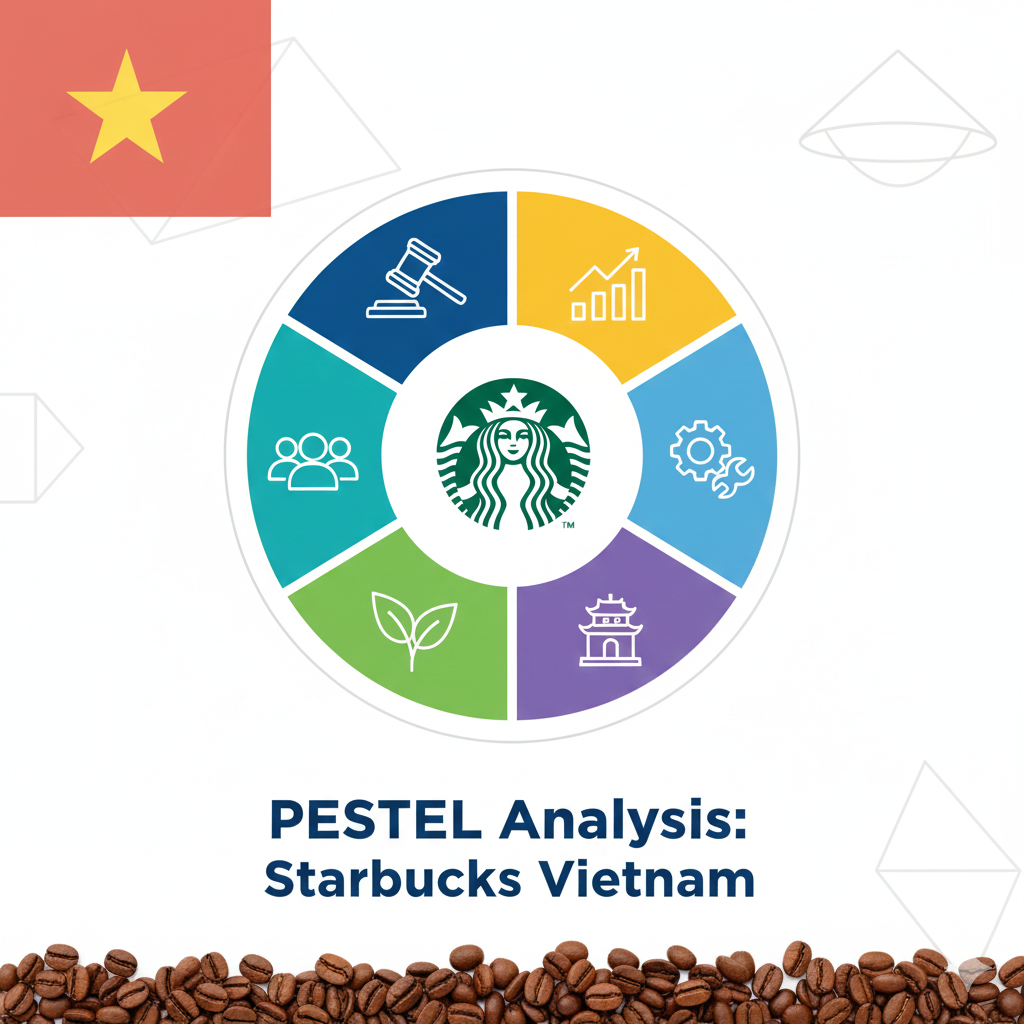
Summary of Pestel Analysis of Starbucks in Vietnam
The PESTEL analysis of Starbucks in Vietnam highlights the importance of various external factors that shape its operations in the country. Politically, Vietnam’s one-party governance provides stability but requires Starbucks to navigate regulatory hurdles, including foreign investment laws, labor policies, and food safety standards. Economically, Starbucks benefits from a growing middle class, urbanization, and increased disposable income in major cities, but faces challenges such as inflation, rising costs, and competitive pressures. Socially, Starbucks’ brand appeals to the young, urban, and tech-savvy population, but the company must also adapt to local coffee preferences and health-conscious trends. Technologically, Starbucks leverages digital payments, mobile apps, and delivery services to enhance customer experience, but must continuously innovate to stay competitive. Environmentally, climate change, resource scarcity, and waste management regulations push Starbucks to adopt sustainable practices, while also responding to consumer expectations for eco-friendly operations. Finally, legally, Starbucks must comply with Vietnam’s complex regulatory framework, including labor laws, competition laws, intellectual property protection, and environmental standards.
Political Factors Affecting Starbucks in Vietnam
Starbucks’ operations in Vietnam are influenced by a unique political environment characterised by one‑party rule, regulatory transitions, foreign investment policies, and trade agreements. These political factors shape how Starbucks enters the market, how it sources goods, how it manages its stores, and how it aligns its global brand with local conditions. Understanding these political dynamics is essential for Starbucks to succeed in Vietnam’s evolving business landscape.
1. Government Stability and Single‑Party Governance
Vietnam is governed by the Communist Party of Vietnam which maintains political stability and long‑term policy direction.
- A stable government means predictable macro‑environment and continuity of economic reform.
- Starbucks benefits from reduced risk of abrupt regime change or dramatic policy shifts which might impede operations.
- However, centralised governance implies that foreign firms must navigate state‑linked approval processes and relationships.
2. Foreign Direct Investment (FDI) Policy and Market Access
Vietnam’s government has actively sought to attract foreign investment, including in the retail and food‑service sectors.
- Preferential policies such as tax incentives and simplified procedures help Starbucks establish operations.
- Starbucks must still conduct due diligence and align with local regulations, including joint‑venture or licensing arrangements if required.
- Political will for FDI supports Starbucks’ expansion but local regulatory oversight remains strong.
3. Trade Agreements and International Relations
Vietnam is a party to several trade agreements (e.g., EVFTA, CPTPP) which influence import tariffs, sourcing costs and market fairness.
- Lower tariffs on imported coffee beans, equipment and packaging help Starbucks manage cost structures.
- Political shifts in trade relations may introduce risk — e.g., new restrictions or changes in import rules can affect supply chains.
- Starbucks needs to monitor trade policy developments and adapt sourcing accordingly.
4. Regulatory Environment and Bureaucratic Oversight
Operating in Vietnam means dealing with layers of regulation — national, provincial and municipal.
- Starbucks must comply with licences, food‑safety regulations, land/use permits and foreign business registration.
- Bureaucracy can cause delays or added cost, especially in new store roll‑outs or supply changes.
- Political efforts to streamline business (e‑governance, one‑stop shops) ease the process but still require local engagement.
5. Intellectual Property (IP) Protection and Brand Risk
Vietnam’s regulatory environment around IP rights is improving but still poses risks for international brands.
- Starbucks must protect its trademarks, store design, and product innovations through Vietnam’s IP system.
- Weak enforcement of IP laws can allow imitation cafés or counterfeit products to challenge brand integrity.
- Political commitment to strengthen IP rights creates an opportunity, but Starbucks must stay vigilant.
6. Labour and Employment Legislation
Vietnam has evolved its labour laws to protect workers and regulate employment conditions.
- Starbucks will need to ensure compliance with minimum wages, social insurance, contractual rules and working conditions.
- Political sensitivity to worker rights means non‑compliance can trigger fines or reputational harm.
- While labour costs remain relatively competitive, Starbucks must manage staffing quality and regulatory risk.
7. Public Health & Safety Regulations
Vietnamese government oversight of food safety and public health has increased in recent years.
- Starbucks must follow standards for food handling, storage, labeling, and ingredient sourcing.
- Sanitation permits, health certificates for staff, and regular inspections are required for each store.
- Violations—such as improper food storage or unsanitary conditions—can result in fines, suspensions, or loss of licenses.
8. Local Government and Regional Variations
Much of Vietnam’s regulation is devolved to provinces and cities.
- Store location approvals, zoning laws, signage permits and local taxes vary significantly from Ho Chi Minh City to smaller provinces.
- Starbucks must manage relationships with local government officials and adapt strategies regionally.
- Political support at local level can accelerate expansion; lack of alignment can slow it.
9. Environmental Regulation and Corporate Responsibility
Vietnam is increasing regulation of environmental impact, waste management and sustainability. While these are more environmental than pure political, they stem from government policy.
- Starbucks must align with government‑mandated waste‑reduction and sustainability practices in Vietnam.
- Non‑compliance might result in regulatory action or negative public perception.
- Starbucks can use its global sustainability reputation to align with these political initiatives.
10. Geopolitical Risk and External Influences
Vietnam’s location in Southeast Asia exposes Starbucks to geopolitical risks (trade tensions, regional security, supply‑chain disruption).
- Political relations between Vietnam and major coffee‑producing/exporting countries affect supply and cost.
- Starbucks must monitor external political developments (e.g., U.S.‑China relations, ASEAN trade policies) which may impact logistics.
- Building resilient strategies helps Starbucks prepare for such external political shocks.
Economic Factors Affecting Starbucks in Vietnam
Starbucks’ operations in Vietnam are strongly influenced by economic conditions such as income levels, urbanisation, consumer spending habits, inflation, currency movements, supply‑chain costs, and market competition. As Vietnam continues to develop its economy, Starbucks must adapt its pricing, sourcing, store strategy and growth plans to match the local economic environment and maintain profitability.
1. Growing Middle Class and Rising Disposable Income
Vietnam has seen significant growth in its middle‑class population and increased disposable income in urban areas.
- More Vietnamese consumers are able to afford branded cafés and premium coffee experiences.
- Starbucks can capitalise on urban growth and increased spending on lifestyle dining.
- However, spending power is uneven across regions, so Starbucks must target higher‑income cities strategically.
2. Inflation and Rising Input Costs
Vietnam’s economy is subject to inflationary pressures and rising costs of imported goods and raw materials.
- Costs for ingredients, packaging, equipment and store operations may increase, squeezing margins.
- Starbucks must monitor inflation and adjust menu pricing, product sizes or sourcing strategies accordingly.
- Local sourcing may mitigate some cost rises but adds complexity.
3. Currency Fluctuations and Import Dependence
Starbucks in Vietnam relies partly on imported coffee beans, equipment and branded merchandise.
- Fluctuations in the Vietnamese đồng or global commodity prices affect Starbucks’ cost base.
- A weaker đồng makes imports more expensive, requiring price adjustments or cost controls.
- Starbucks needs flexible sourcing and hedging strategies to manage exchange‑rate risk.
4. Urbanisation and Retail Expansion Opportunities
Vietnam is undergoing rapid urbanisation, with more people moving to cities and increasing demand for modern retail services.
- Starbucks benefits from increased foot traffic in shopping malls, airports, business districts and affluent neighbourhoods.
- Growth in urban areas creates favourable conditions for store expansion and higher store volumes.
- However, real estate costs in prime urban locations are rising, affecting store profitability.
5. Competitive Market and Local Café Culture
Vietnam’s coffee market is already lively with local brands, independent cafés and international chains.
- Starbucks must differentiate itself on quality, service and brand reputation to compete.
- Competitive pricing pressure may limit Starbucks’ ability to push premium pricing in some segments.
- Building customer loyalty and unique experience becomes important to maintain market share.
6. Tourism and Retail Demand
Vietnam’s tourism sector supports demand for international café brands like Starbucks.
- Tourist traffic in major cities like Ho Chi Minh City and Hanoi increases store patronage, especially for global brands.
- Economic slowdowns or travel disruptions can reduce this revenue stream.
- Starbucks needs to balance its local customer strategy with tourist‑driven footfall.
7. Labour Costs and Workforce Availability
Vietnam’s labour market is relatively low cost compared to developed markets but is gradually becoming more competitive.
- As the economy develops, labour costs may rise, affecting Starbucks’ cost structure.
- Training, wage increases and staff retention become important in delivering consistent service.
- Starbucks must manage this transition while maintaining its service standards.
8. Supply Chain and Logistics Efficiency
Vietnam’s developing infrastructure and supply chain pathways influence operational costs for Starbucks.
- Efficient logistics are needed to manage timely delivery of fresh ingredients, store supplies and equipment.
- Delays, inefficiencies or import‑export bottlenecks increase costs or affect store operations.
- Starbucks may need to invest in local sourcing and distribution networks to reduce dependency on imports.
9. Economic Cycles and Consumer Confidence
Vietnam’s economy, while growing, is subject to global economic downturns, commodity price shifts and domestic volatility.
- Changes in consumer confidence affect spending on non‑essential items like premium coffee.
- Starbucks must prepare for slower growth periods, adjusting promotions, store formats or product mixes accordingly.
10. Real Estate and Rental Costs
Store locations in urban centres come with high rental and lease costs.
- As real estate markets tighten in major Vietnamese cities, Starbucks may face increased overheads.
- Strategic location planning, mixed‑use store formats or smaller store designs could help manage costs.
- Balancing high‑visibility sites with profitability is key for Starbucks’ growth in Vietnam.
Social Factors Affecting Starbucks in Vietnam
Starbucks’ success in Vietnam is shaped by many social and cultural trends — including the country’s rich coffee‑drinking heritage, rising youth culture, digital connectivity, changing lifestyles, health consciousness, and values around brand experience. These social factors influence how Starbucks positions its stores, designs its menu, engages customers, and builds its brand in Vietnam’s fast‑evolving market.
1. Deep Coffee Culture and Local Drinking Habits
Vietnam has a longstanding coffee culture that forms part of daily life.
- Traditional drinks like “cà phê đen đá” (iced black coffee with condensed milk) remain very popular.
- Coffee shops are social spaces for meeting friends, relaxing or working, beyond just grabbing a drink.
- Starbucks must respect this tradition while introducing its global format, by offering localised beverages and creating inviting store environments.
2. Young, Urban and Tech‑Savvy Population
Vietnam’s urban centres, especially Hanoi and Ho Chi Minh City, house a growing number of young professionals and university‑educated consumers.
- These consumers value brand experiences, aesthetic store settings, and digital convenience.
- Starbucks appeals to this segment by offering modern décor, mobile ordering, WiFi and international brand recognition.
- Catering to youth trends and social media sharing (Instagram‑worthy drinks and spaces) helps Starbucks stay relevant.
3. Health, Lifestyle and Wellness Trends
Vietnamese consumers are increasingly aware of health, quality and lifestyle choices.
- Demand is rising for premium or “specialty” coffee, whose story, origin and quality matter.
- Starbucks can respond with high‑quality blends, plant‑based milk options, and healthier snack items to meet evolving consumer expectations.
- This shift challenges Starbucks to balance premium pricing with accessible value in a market with strong local alternatives.
4. Brand Consciousness and International Appeal
As international travel and exposure increase, Vietnamese consumers show greater interest in global brands and “aspirational” experiences.
- Starbucks enjoys strong brand recognition and is seen as a premium lifestyle choice.
- However, local cafés and chains are also improving rapidly, so Starbucks must continue innovating and differentiating its brand experience.
5. Social Media, Influencer Culture and Digital Engagement
Vietnam has a high rate of social‑media use, and young consumers are strongly influenced by online trends.
- Starbucks leverages its mobile app, loyalty program and social media campaigns to engage customers.
- Visually appealing drinks, seasonal launches and store experiences drive social sharing and brand buzz.
- This digital engagement amplifies Starbucks’ presence and relevance in the Vietnamese café market.
6. Economic & Social Stratification and Regional Differences
Vietnam’s consumer base is diverse, and there are contrasts between affluent urban areas and less developed regions.
- Starbucks’ primary success is in major cities where income levels, café culture and lifestyle behaviours support premium brands.
- As Starbucks looks to expand to secondary cities, it must adapt its product range, pricing and store format to regional preferences and spending power.
- Understanding local tastes, customs and spending habits is essential for regional rollout.
7. Social Spaces, Work Culture and Café Usage
In urban Vietnam, cafés serve as workplaces, meeting venues and leisure spots.
- Starbucks can capitalise on this trend by offering comfortable seating, reliable WiFi and environments conducive to working or socialising.
- The shift toward café usage beyond just coffee consumption demands store layouts and service models tailored to longer stays and multifaceted use.
8. Sustainability, Ethical Expectations and Social Responsibility
Vietnamese consumers are increasingly conscious of sustainability, ethical sourcing and corporate responsibility.
- Starbucks must demonstrate its commitment to responsible sourcing, waste reduction and community engagement to build trust.
- Social value and brand ethics now influence purchasing behaviour, especially among younger consumers.
9. Competing Local Café Culture and Customisation Expectations
Vietnam has a vast ecosystem of local cafés, street‑side “quán cà phê” and independent shops offering customised drinks at lower cost.
- Starbucks must differentiate through consistent quality, brand experience, innovation and localisation of menu items.
- Offering drinks tailored to Vietnamese tastes (e.g., local flavours, smaller portion sizes) helps meet consumer expectations and localise the global brand.
10. Social Shifts in Work‑Life Balance and Leisure Consumption
As Vietnam’s economy grows, lifestyle changes include increased leisure time, café visits, and higher non‑food spending.
- Starbucks benefits as consumers view café visits as lifestyle experiences rather than occasional treats.
- However, macro‑economic factors or social pressures (e.g., long work hours, commute times) can affect visitation frequency.
- Starbucks must remain agile in adapting store formats and service hours to changing consumer rhythms.
Technological Factors Affecting Starbucks in Vietnam
Technology significantly influences how Starbucks operates, engages customers, and expands in Vietnam’s growing market. With rising digital adoption, evolving consumer expectations, and supply‑chain complexities, technological factors play a crucial role in Starbucks’ business model in Vietnam. By leveraging digital tools, automation, and data analytics, Starbucks can improve customer experience, operational efficiency, and competitive positioning in the Vietnamese café market.
1. Mobile Ordering, Digital Payments and Cashless Transactions
Vietnam is seeing rapid growth in mobile banking, e‑wallets and contactless payment methods in urban areas.
- Starbucks integrates mobile ordering and payment via apps and digital wallets, allowing Vietnamese customers to place orders ahead and reduce waiting time.
- Acceptance of e‑wallets and QR payments caters to tech‑savvy young consumers and urban professionals.
- Digital payments reduce cash handling, enhance transaction speed, and improve convenience in busy store locations.
2. Starbucks Mobile App, Loyalty Program and Personalisation
The Starbucks app and loyalty programme provide a platform for personalised offers, rewards and customer engagement.
- Vietnamese users can earn rewards, customise orders, manage payments, and receive promotions through the app.
- Data collected via app usage helps Starbucks tailor offers, menu items and store features to local consumer behaviour.
- Personalisation strengthens customer loyalty in a market where digital experiences are increasingly valued.
3. Integration with Food Delivery Platforms and Online Channels
The rise of food‑delivery apps in Vietnam has accelerated during the pandemic and continues to influence consumer behaviour.
- Starbucks partners with local delivery platforms to reach customers who prefer ordering from home or office.
- Delivery integration requires the company to optimise packaging, product stability, temperature control, and delivery logistics.
- Online channels extend Starbucks’ reach beyond physical stores and support growth in secondary cities.
4. High‑Tech Coffee Equipment and Automation
Starbucks employs advanced coffee machines, grinders and brewing equipment to ensure product consistency across its stores.
- Automation helps reduce human error, improve drink quality and maintain the global standard of Starbucks in Vietnam.
- Coffee equipment upgrades support new product launches and premium beverage formats.
- Investment in technology aligns with consumer expectations for high‑quality coffee experience in urban Vietnamese market.
5. Supply Chain Technology and Inventory Management
Efficient supply chain operations are critical in Vietnam with its archipelago geography and varied infrastructure.
- Starbucks uses digital inventory management systems and tracking tools to monitor freshness, stock levels and deliveries.
- Technology helps mitigate risks of shortages, spoilage and inconsistencies in store performance across locations.
- Real‑time data enables better forecasting, lower waste and improved supply reliability in Vietnam.
6. Data Analytics, AI and Business Intelligence
Starbucks utilises data analytics and artificial intelligence to refine store performance, customer insights and product innovation.
- By analysing purchase data, store footfall, demographics and app activity, Starbucks can tailor its offerings to the Vietnamese market.
- AI‑driven forecasting helps manage demand, staffing levels, menu optimisation and store layouts.
- Business intelligence drives strategic decisions on location expansion, product launches and marketing campaigns in Vietnam.
7. In‑Store Digital Experience and Wi‑Fi Connectivity
In urban Vietnam, consumers expect cafés to provide not just coffee but an experience.
- Starbucks offers free Wi‑Fi, charging stations and digital touchpoints in store to cater to students, freelancers and young professionals.
- Digital signage, interactive menus and boarding displays enhance store ambience and customer engagement.
- These features support longer dwell time, higher spend per visit and stronger brand loyalty.
8. Social Media, Influencer Marketing and Digital Campaigns
Vietnam has high social‑media engagement among its younger population, influencing how brands market and connect.
- Starbucks uses Instagram, TikTok and Facebook to launch promotions, seasonal drinks and interactive campaigns in Vietnam.
- Visual‑first beverages, store décor and online content drive brand visibility and word‑of‑mouth.
- Digital marketing complements in‑store technology to create a seamless omnichannel experience.
9. Cybersecurity, Data Privacy and Technology‑Driven Risk
With increased reliance on mobile apps, payments and user data, Starbucks must prioritise cybersecurity and data protection in Vietnam.
- The company must ensure secure transactions, protect customer data and comply with Vietnam’s emerging data‑protection regulations.
- Data breaches or system failures could damage Starbucks’ reputation and violate legal obligations.
- Robust IT infrastructure and constant monitoring help mitigate technology‑related risks.
10. Innovation and Future Technology Adoption
Innovation is essential for Starbucks to remain relevant in Vietnam’s dynamic market.
- Starbucks explores emerging technologies like IoT (Internet of Things), smart store systems and sustainability tech in store operations.
- Pilot programmes for new store formats, digital kiosks or cashless drive‑thrus may enhance versatility in Vietnam.
- Early adoption of new technologies positions Starbucks ahead of competition and delivers a differentiated customer experience.
Environmental Factors Affecting Starbucks in Vietnam
Vietnam presents unique environmental challenges and opportunities for Starbucks — from climate change impacts on coffee sourcing, to evolving sustainability regulations, waste management expectations, and resource constraints. These environmental factors influence Starbucks’ sourcing strategy, operations, brand reputation and its ability to deliver a consistent customer experience in Vietnam’s increasingly environmentally aware market.
1. Climate Change, Extreme Weather and Coffee Supply Risks
Vietnam’s coffee production, especially in the Central Highlands, is under pressure from rising temperatures, droughts and shifting rainfall patterns.
- Coffee yields may decline, quality may suffer, and supply chain reliability can be affected by extreme weather events.
- Starbucks must consider sourcing risks, support sustainable farming practices, and maintain flexibility in its supply chain.
- As a premium brand, Starbucks needs to ensure bean quality and consistency despite environmental variability.
2. Deforestation and Land‑Use Regulation
Vietnam’s coffee sector must increasingly comply with regulations on deforestation and land conversion.
- Starbucks must ensure its coffee suppliers follow traceability, land‑use legality and forest‑preservation standards.
- Treatment of deforestation risk influences brand reputation — Vietnamese consumers and global stakeholders expect ethical sourcing.
- Compliance with global import standards (e.g., for exports to EU) may affect supply cost and operational complexity.
3. Resource Constraints: Water, Soil and Fertiliser Use
Environmental resource issues (water scarcity, soil quality degradation, over‑use of fertilisers) affect coffee agriculture in Vietnam.
- Starbucks must work with suppliers to promote responsible farming practices (efficient irrigation, reduced chemical use, soil conservation).
- Any deterioration in raw‑material quality could increase cost and affect menu offerings.
- Environmental stewardship in sourcing supports Starbucks’ global sustainability commitments and enhances brand image locally.
4. Waste Management, Packaging and Single‑Use Plastics
Vietnam is stepping up regulations and consumer expectations around waste reduction, packaging sustainability and plastic usage.
- Starbucks must align its store operations (cups, straws, take‑away packaging) with local environmental regulations and consumer preferences.
- Adoption of eco‑friendly packaging, recyclable materials and reusable‑cup incentives helps Starbucks meet both regulatory and brand expectations.
- Operational shifts (cost, supply chain modifications) may be required to align with environmental standards.
5. Energy Efficiency and Carbon Emissions Policies
Vietnam’s environmental policy agenda — including emissions trading schemes and national climate commitments — influences commercial operations.
- Starbucks stores may need to incorporate energy‑efficient equipment, lower carbon heating/cooling systems and renewable energy sources.
- Demonstrating carbon‑reduction initiatives supports Starbucks’ sustainability narrative and meets stakeholder expectations.
- Energy cost savings and reputational benefits are balanced against investment in greener technology.
6. Consumer Environmental Awareness and Brand Expectations
Vietnamese consumers are increasingly conscious of environmental issues and favour brands that reflect responsible practices.
- Starbucks’ sustainability messaging, transparency on sourcing and waste initiatives influence purchasing behaviour.
- Offering plant‑based alternatives, ethically sourced coffee and visible green practices helps Starbucks connect with this demographic.
- Failure to meet environmental expectations could damage brand trust and open space for competitors.
7. Regulatory Compliance and International Export Standards
Vietnam’s environmental laws and export‑market requirements (like the EU Deforestation Regulation) impose compliance burdens on coffee production that indirectly affect Starbucks.
- Starbucks must ensure its supply chain aligns with environmental regulations and certifications to avoid disruptions or reputational risk.
- Suppliers failing to comply may affect Starbucks’ sourcing continuity or increase cost for compliant beans.
- Proactive engagement in sustainability initiatives secures long‑term sourcing resilience.
8. Environmental Risk in Expansion and Store Operations
When expanding stores across Vietnam, Starbucks must consider local environmental constraints — such as natural hazards, land‑use limits, waste infrastructure and municipal regulations.
- Store construction or refurbishment may require environmental impact assessments (EIA) or compliance with local eco‑building regulations.
- Location decisions, equipment choices, water and energy usage must factor in regional environmental conditions.
- Managing store operations to reduce environmental footprint aligns with Starbucks’ brand promise and local stakeholder expectations.
Legal Factors Affecting Starbucks in Vietnam
Starbucks’ operations in Vietnam are guided by a complex legal framework that covers areas such as labor laws, food safety regulations, intellectual property protection, taxation, and competition laws. Vietnam’s evolving legal environment plays a crucial role in shaping Starbucks’ business practices, brand reputation, and operational strategies. Adhering to legal requirements is essential for Starbucks to maintain compliance, avoid penalties, and sustain its long-term success in the competitive Vietnamese market.
1. Labor Laws and Employment Standards
Vietnam has comprehensive labor laws that protect workers’ rights, set minimum wage standards, and regulate working conditions.
- Starbucks must comply with Vietnam’s labor laws regarding minimum wage, working hours, benefits, and employment contracts.
- The company is required to provide social insurance, health insurance, and mandatory benefits such as paid leave.
- Labor law violations, such as improper wage practices or failure to provide benefits, could result in fines or reputational damage.
2. Food Safety and Health Regulations
Vietnam enforces strict food safety standards under its Food Safety and Hygiene Regulations, which Starbucks must comply with.
- Starbucks must adhere to local regulations governing the sourcing, handling, storage, and preparation of food and beverages.
- Regular health inspections and certifications are required for each store to ensure that food safety standards are met.
- Any violations of food safety laws, such as improper storage or labeling, could lead to store closures or fines.
3. Intellectual Property (IP) Protection
Vietnam has made significant progress in strengthening its intellectual property laws to protect trademarks, patents, and copyrights.
- Starbucks must register its trademarks, logos, and product designs with the National Office of Intellectual Property (NOIP) to safeguard its brand identity.
- Protection against counterfeit goods and imitation products is essential, as the market for coffee in Vietnam becomes more competitive with both local and international brands.
- Starbucks must actively monitor and enforce its IP rights to prevent infringement and safeguard its brand reputation.
4. Taxation and Corporate Regulation
Starbucks is subject to Vietnam’s corporate tax policies, including value-added tax (VAT), income tax, and business licensing fees.
- Vietnam imposes a 20% corporate tax rate, and Starbucks must ensure accurate reporting and tax compliance to avoid penalties.
- Starbucks is also required to adhere to VAT rules, which affect pricing and financial operations in the country.
- Changes in tax regulations or corporate taxation policies could impact Starbucks’ pricing strategies and overall profitability.
5. Consumer Protection Laws
Vietnam has strict consumer protection laws aimed at safeguarding the rights of consumers, particularly in the food and beverage sector.
- Starbucks must ensure that its products are accurately labeled, including disclosing allergens, nutritional content, and ingredients.
- Marketing practices must be transparent and not misleading, particularly in areas such as product claims and promotional offers.
- Violating consumer protection laws could result in fines, store closures, or legal action from consumer rights organizations.
6. Foreign Investment and Ownership Regulations
Vietnam’s laws governing foreign direct investment (FDI) and business ownership affect how Starbucks operates in the country.
- Foreign companies are allowed to establish wholly owned subsidiaries, joint ventures, or franchise models in Vietnam.
- Starbucks entered the Vietnamese market through a joint venture model, and changes in FDI laws could impact future expansion strategies or ownership structures.
- Starbucks must ensure compliance with all FDI regulations and establish clear contractual relationships with local partners or franchisees.
7. Environmental Laws and Sustainability Requirements
Vietnam has implemented a range of environmental laws that influence Starbucks’ operations, particularly in areas such as waste management, packaging, and energy consumption.
- Starbucks is required to comply with national and local regulations related to waste disposal, recycling, and the use of eco-friendly materials in packaging.
- Starbucks’ commitment to sustainability must align with the government’s push for reduced plastic use and environmental impact.
- Failure to comply with environmental regulations could lead to fines, sanctions, or damage to the brand’s reputation.
8. Competition Laws and Fair Trade Practices
Vietnam’s competition laws aim to promote fair business practices and prevent monopolistic behaviors.
- Starbucks must ensure that its pricing strategies, promotional tactics, and supplier agreements comply with Vietnam’s anti‑monopoly regulations.
- Price manipulation, collusion with competitors, or anti‑competitive practices could lead to legal sanctions or restrictions on Starbucks’ business operations.
- The Vietnamese government actively monitors foreign companies to ensure that they do not exploit market dominance.
9. Franchise Laws and Business Licensing
Starbucks must comply with franchise laws and business licensing regulations in Vietnam.
- The franchise model requires Starbucks to adhere to the Vietnamese Franchise Law, which ensures transparency in franchise agreements and protects franchisees’ rights.
- Starbucks must provide comprehensive disclosure to franchisees and comply with operational standards to maintain uniformity in its brand experience.
- Any failure to meet franchise law requirements could lead to legal disputes, business interruptions, or loss of franchise agreements.
10. Advertising and Marketing Laws
Vietnam has regulations governing advertising practices, including rules on false advertising, misleading claims, and transparency in marketing.
- Starbucks must ensure that its advertising campaigns comply with the Law on Advertising, avoiding exaggerated claims about product benefits or misleading promotions.
- All marketing materials must provide accurate information about the company’s products and services, ensuring consumer trust.
- Violations of advertising laws could result in penalties, forced retraction of promotional materials, or brand damage.
Conclusion
The PESTEL analysis underscores that Starbucks must remain agile and responsive to the multifaceted external factors shaping its business in Vietnam. Political stability, combined with careful navigation of government regulations and local partnerships, enables Starbucks to thrive, but challenges remain in adapting to evolving foreign investment policies and regional variations in regulations. Economic factors such as the growing middle class, consumer spending power, and inflation pressures influence Starbucks’ pricing strategies, while the company must balance premium offerings with cost-conscious customers. Social dynamics call for ongoing adaptation to local tastes and preferences, while engaging younger, digital-first consumers who value personalization and ethical sourcing. The company’s reliance on technology—from mobile payments to supply chain innovation—helps streamline operations, but it must continue embracing new trends to meet consumer expectations. Starbucks must also address environmental concerns by aligning its operations with Vietnam’s sustainability initiatives, reducing waste, and ensuring resource efficiency. Finally, legal compliance remains vital as Starbucks must adhere to local labor laws, food safety regulations, and competition rules to maintain a positive reputation and operational integrity.
Starbucks’ ability to navigate the interplay between these factors will determine its success and sustainability in the competitive Vietnamese market. By embracing regulatory requirements, cultural preferences, technological advancements, and sustainability trends, Starbucks can continue to expand its presence while maintaining its status as a premium coffee brand in Vietnam.