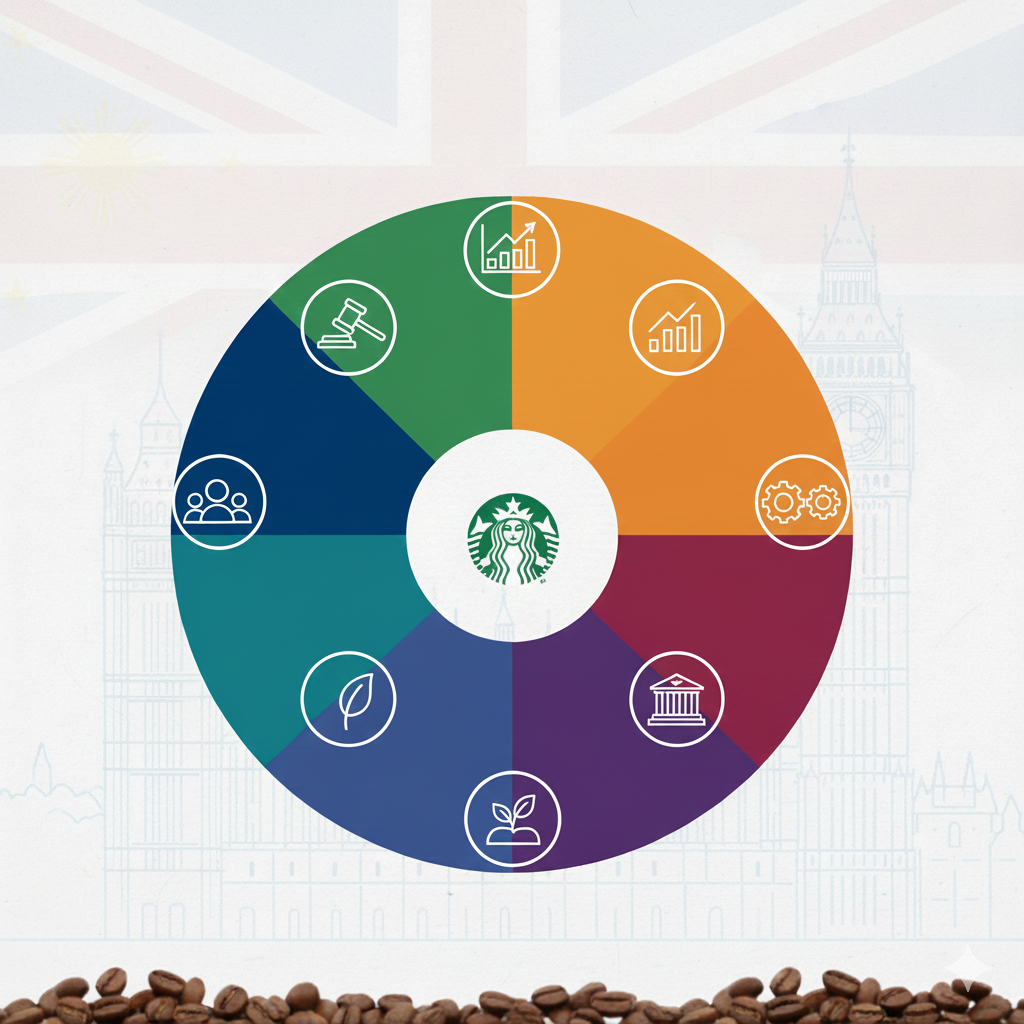
Summary of PESTEL Analysis of Starbucks in the UK
Starbucks operates in a mature and highly regulated environment in the United Kingdom, where political stability, strong governance, and detailed regulations shape its business practices. Government policies on taxation, labor, sustainability, and trade collectively influence how Starbucks structures its operations, sources its products, and plans long-term expansion. Economically, the UK’s fluctuating growth, inflationary pressures, rising living costs, and competitive retail landscape create both opportunities and challenges. Consumer spending patterns vary across regions, requiring Starbucks to balance its premium identity with value-sensitive market segments.
Socially, the UK’s established café culture, multicultural population, and health-conscious lifestyle trends strongly affect Starbucks’ menu decisions and brand positioning. Younger consumers and remote workers play a major role in driving demand for digital services, personalized beverages, and comfortable store environments. Technological advancements, such as mobile ordering, digital loyalty programs, self-service systems, and data-driven decision-making, enable Starbucks to enhance customer experience and improve operational efficiency. These technologies are essential in a country where digital adoption and online engagement are extremely high.
Environmental expectations in the UK are stringent, with strong public support for sustainability, plastic reduction, and carbon emission goals. Starbucks must maintain eco-friendly packaging, energy-efficient stores, and waste reduction initiatives to align with regulatory requirements and consumer values. Legally, Starbucks faces comprehensive regulations concerning food safety, employment, advertising, data protection, franchising, and competition laws. The strict legal framework demands consistent compliance, transparency, and strong corporate governance at all levels of operation. Also, read Pestle analysis of Starbucks here.
Political Factors Affecting Starbucks in the UK
Starbucks operates in a politically stable but highly regulated market in the United Kingdom. Government policies, trade agreements, labor laws, taxation rules, and public attitudes influence Starbucks’ operations, pricing, sourcing, and long-term business strategy. The UK political environment shapes how Starbucks navigates compliance, manages its workforce, responds to economic pressures, and adapts to public expectations around sustainability, transparency, and corporate conduct.
1. Political Stability and Business Confidence
The UK is known for its stable political system, which provides a predictable environment for multinational companies like Starbucks.
- Political stability supports long-term investments, store expansions, and operational planning.
- Changes in leadership or government priorities—such as those following elections—may create policy adjustments that Starbucks must monitor and respond to.
2. Impact of Brexit on Trade and Operations
Brexit significantly influenced Starbucks’ supply chain, import rules, and trade relationships.
- Changes in customs procedures and border checks increased delivery times and logistical costs.
- New trade agreements or tariff adjustments affect the cost of importing coffee beans, dairy products, equipment, and merchandise.
- Fluctuations in the value of the British Pound impact Starbucks’ procurement and pricing decisions.
3. Government Tax Policies and Corporate Regulation
The UK government enforces strict tax rules, including corporate taxation, VAT, and business rates.
- Starbucks must comply with evolving tax structures, which influence its profit margins and pricing strategies.
- Past scrutiny over tax arrangements heightened pressure for Starbucks to adopt transparent tax practices.
- Political pressure regarding multinational taxation affects Starbucks’ public image and operating obligations.
4. Labor Regulations and Employment Laws
The UK has comprehensive labor laws governing wages, employee rights, contracts, and working conditions.
- Starbucks must comply with minimum wage requirements, holiday pay, anti-discrimination laws, and workplace safety standards.
- Wage increases, particularly in London, raise operational costs and require adjustments in staffing and price strategies.
- Employment laws also regulate part-time and shift-based work, influencing Starbucks’ scheduling and workforce management.
5. Food Safety and Public Health Regulations
Starbucks must follow strict food safety regulations enforced by agencies such as the Food Standards Agency (FSA).
- Compliance with hygiene rules, allergen labeling, and ingredient traceability is mandatory.
- Changes in public health policies—such as sugar reduction campaigns—affect Starbucks’ menu planning and product development.
6. Environmental and Sustainability Legislation
The UK government has increasingly strict environmental rules targeting plastic waste reduction, recycling, and carbon emissions.
- Bans on single-use plastics require Starbucks to adopt eco-friendly alternatives.
- Carbon reduction targets push Starbucks to embrace sustainable store design, renewable energy sources, and waste minimization.
- Failure to comply can lead to fines or damage to brand reputation among eco-conscious UK consumers.
7. Trade Agreements and Global Sourcing
As Starbucks imports most of its coffee beans, international trade agreements significantly affect its operations.
- Changes in UK trade relations with producing countries can influence product availability and cost.
- Tariff changes impact sourcing strategies and pricing structures.
- Starbucks must monitor geopolitical tensions, as they may disrupt supply chains.
8. Local Government Regulations and Business Permits
Starbucks must comply with local council regulations for store operations, construction permits, zoning, waste disposal, and trading hours.
- Different councils impose varied fees and regulations, affecting store expansion timelines.
- Compliance with city-specific sustainability initiatives—such as the London Ultra Low Emission Zone (ULEZ)—influences logistics and transportation strategies.
9. Public Activism and Political Pressure
Public campaigns around climate change, corporate ethics, and fair trade influence Starbucks’ political responsibilities.
- Activist groups may demand greater transparency in sourcing, taxation, or environmental impact.
- Public pressure can shape corporate policy, pushing Starbucks toward more responsible and socially aligned practices.
10. Immigration and Workforce Policies
Immigration laws influence workforce availability, especially for part-time and service-oriented roles.
- Brexit-related restrictions reduced the number of EU workers, creating staffing challenges for cafés and hospitality businesses.
- Starbucks must adjust recruitment strategies and invest in local staff development to address labor shortages.
Economic Factors Affecting Starbucks in the UK
Starbucks’ performance in the United Kingdom is strongly influenced by national economic conditions, consumer spending behavior, inflation, labor market trends, currency volatility, and competitive dynamics. As a premium coffee brand, Starbucks must constantly evaluate the economic environment to adjust pricing, store operations, supply chain management, and market strategies. These economic factors shape Starbucks’ profitability, growth opportunities, and long-term resilience in the UK market.
1. Overall Economic Stability and Growth Trends
The UK is considered a mature and stable economy, but it faces periodic slowdowns influenced by global events, Brexit outcomes, and domestic challenges.
- Economic stability supports Starbucks’ expansion plans and fosters consistent consumer spending.
- Economic slowdowns, recessions, or high living costs reduce discretionary income, leading consumers to cut back on premium coffee purchases.
- Starbucks must regularly adjust to economic cycles to maintain profitability.
2. Consumer Spending Power and Income Levels
The UK’s consumer base has varying income levels across regions.
- In major cities like London, Edinburgh, and Manchester, higher disposable incomes support strong demand for Starbucks products.
- However, rising living costs and stagnant wage growth leave many consumers price-sensitive, especially in suburban or rural areas.
- Starbucks must balance premium positioning with affordability to retain customers.
3. Inflation and Rising Cost of Goods
Inflation has significantly impacted the UK food and beverage sector.
- Increases in the prices of coffee beans, dairy, sugar, packaging, and transportation raise Starbucks’ operational costs.
- Starbucks often adjusts menu prices to offset cost pressures, but frequent price increases can deter customers.
- Supply chain disruptions—such as energy price spikes—further increase operating expenses.
4. Currency Fluctuations and Import Dependence
Starbucks imports coffee beans, equipment, and raw materials from various countries, making it sensitive to currency fluctuations.
- A weak British Pound increases import costs, reducing profit margins.
- Post-Brexit currency volatility has added uncertainty to Starbucks’ long-term supply planning.
- Exchange rate instability forces Starbucks to reassess pricing and sourcing strategies regularly.
5. Real Estate Costs and Store Location Economics
Starbucks locations—especially in central London and major UK cities—face some of the highest commercial rents in Europe.
- High rental costs increase operational expenses and pressure store profitability.
- Starbucks must choose high-footfall areas to justify premium rents.
- Smaller-format stores and drive-thru locations have become strategic responses to high rental environments.
6. Labor Costs and Workforce Shortages
The UK’s minimum wage increases and post-Brexit labor shortages heavily affect Starbucks.
- Wage growth and staffing challenges raise operational costs.
- Competition within the hospitality sector increases pressure to offer better wages and benefits.
- Starbucks must invest in staff retention, training, and recruitment strategies to maintain service quality.
7. Competition and Market Saturation
The UK has a robust coffee culture with strong competition from Costa Coffee, Caffè Nero, Pret A Manger, Greggs, and independent cafés.
- Highly competitive pricing forces Starbucks to justify its premium pricing with superior quality, ambiance, and customer experience.
- Market saturation in major cities means Starbucks must innovate with product offerings and store types to stand out.
8. Shifts in Consumer Behavior and Lifestyle Trends
Changes in how UK consumers spend influence Starbucks’ growth.
- Remote work trends reduce foot traffic in business districts but increase demand in suburban areas.
- Demand for healthier alternatives, plant-based products, and specialty beverages has grown.
- Starbucks must continuously innovate its menu to reflect lifestyle and dietary shifts.
9. Impact of Tourism on Store Revenue
Tourism is a major economic driver in cities like London, Bath, and Edinburgh.
- International tourists often seek familiar global brands like Starbucks.
- Economic disruptions—such as pandemics or travel restrictions—significantly reduce tourism-related revenue.
- Recovery in the tourism sector boosts Starbucks’ performance in high-traffic tourist zones.
10. Energy Prices and Operational Expenses
Rising energy costs in the UK directly impact store profitability.
- Starbucks’ operations depend on electricity-heavy equipment like espresso machines, refrigeration units, and heating systems.
- Higher utility expenses require energy-efficient strategies and cost-management practices.
11. Household Debt and Consumer Financial Pressure
As living expenses rise, many UK households face increasing financial pressure.
- High levels of household debt reduce discretionary spending on premium beverages.
- Starbucks must respond by offering value-based promotions and smaller-sized, affordable menu options.
12. Economic Uncertainty and Global Shocks
Events such as pandemics, geopolitical tensions, and global financial instability disrupt Starbucks’ supply chain and demand patterns.
- Economic uncertainty reduces consumer confidence.
- Starbucks must build flexible, resilient systems to manage sudden market changes.
Social Factors Affecting Starbucks in the UK
Starbucks’ performance in the United Kingdom is shaped by a wide range of social and cultural factors. Consumer lifestyles, demographic trends, preferences for café culture, digital habits, and evolving attitudes toward health, sustainability, and brand identity all influence how Starbucks designs its menu, operates its stores, and engages with customers. Understanding these social factors is essential for maintaining brand relevance and customer loyalty in the UK’s competitive coffee market.
1. Strong Café Culture and Social Lifestyle
The UK has a well-established café culture where visiting coffee shops is part of daily life.
- Many consumers treat cafés as social spaces for meeting friends, studying, or working.
- Starbucks benefits from this trend by providing cozy interiors, Wi-Fi access, and a relaxed atmosphere.
- The rise of remote work and flexible schedules has further increased demand for comfortable café environments.
2. Health Consciousness and Dietary Preferences
British consumers are increasingly health-conscious and selective about their food choices.
- Demand for lower-calorie drinks, reduced sugar options, and healthier food items continues to rise.
- Starbucks has responded with plant-based milk alternatives, sugar-free syrups, and vegan food selections.
- Clear nutritional information and healthier menu offerings help Starbucks maintain competitiveness in this health-focused market.
3. Demand for Premium and Specialty Coffee
The UK’s growing interest in premium-quality coffee influences Starbucks’ product strategy.
- Consumers appreciate specialty blends, ethical sourcing, and unique seasonal beverages.
- Starbucks’ premium positioning aligns with UK expectations for high-quality coffee experiences.
- The popularity of artisan and independent cafés pushes Starbucks to maintain high standards and innovate constantly.
4. Influence of Youth and Millennial Consumers
Younger customers—including millennials and Gen Z—form a significant portion of Starbucks’ UK consumer base.
- They are drawn to trendy drinks, customization options, and the Starbucks Rewards app.
- Younger consumers place importance on brand values, social responsibility, and sustainability.
- Their digital habits and social media engagement shape how Starbucks promotes products and communicates online.
5. Impact of Social Media and Digital Trends
Digital engagement is a major driver of consumer behavior in the UK.
- Platforms like Instagram, TikTok, and Twitter influence product demand, especially seasonal beverages and aesthetic drinks.
- User-generated content boosts Starbucks’ brand visibility and encourages viral trends.
- Digital marketing campaigns and influencer partnerships are essential for reaching modern UK audiences.
6. Cultural Diversity and Localization of Offerings
The UK population is culturally diverse, and Starbucks must cater to varied tastes and preferences.
- Seasonal and culturally inspired drinks help connect with different communities.
- Food offerings often reflect local cuisine expectations while maintaining global brand consistency.
- Cultural diversity also impacts customer service expectations and store environment designs.
7. Growing Emphasis on Sustainability and Ethical Values
UK consumers increasingly prioritize sustainability and corporate responsibility.
- Many customers expect brands to reduce plastic waste, source ethically, and minimize carbon emissions.
- Starbucks’ sustainability efforts—such as reusable cup initiatives and ethically sourced coffee—are important drivers of trust and loyalty.
- Consumers prefer brands that are transparent about their environmental and social impact.
8. Changing Work Habits and Rise of Remote Working
Remote work has changed how people use café spaces in the UK.
- Many consumers now visit Starbucks during non-peak hours to work or study.
- Access to Wi-Fi, charging outlets, and quiet seating areas has become essential to customer satisfaction.
- Starbucks locations in suburban areas have gained increased foot traffic due to work-from-home arrangements.
9. Price Sensitivity and Consumer Value Perception
The UK population includes a wide range of income groups, and price perception plays a significant role in purchase decisions.
- While many consumers view Starbucks as a premium treat, some are price-sensitive and compare it with local alternatives.
- Economic pressures, such as rising living costs, influence how often consumers purchase premium coffee.
- Starbucks must balance value offerings with its premium brand identity.
10. Tourism and International Brand Familiarity
The UK attracts millions of tourists who often seek familiar global brands.
- Starbucks benefits from strong brand recognition among international travelers.
- Locations in airports, train stations, and tourist hubs experience high demand.
- Tourism boosts sales of beverages, merchandise, and packaged coffee products.
11. Social Expectations Around Inclusivity and Corporate Responsibility
UK consumers value inclusivity, diversity, and ethical business practices.
- Starbucks must maintain a positive public image by supporting inclusive hiring practices and community programs.
- Corporate social responsibility initiatives enhance brand reputation and consumer trust.
- Social expectations influence Starbucks’ messaging, store culture, and employee engagement.
12. Trend Toward Convenience and On-the-Go Consumption
Busy UK lifestyles encourage quick-service models and mobile ordering.
- Starbucks’ mobile app, drive-thru stores, and grab-and-go products align with fast-paced urban living.
- Convenience remains a major factor influencing customer loyalty and purchase frequency.
Technological Factors Affecting Starbucks in the UK
Technology plays a crucial role in shaping Starbucks’ operations, customer experience, and competitive position in the United Kingdom. From digital innovations to supply chain advancements, Starbucks relies heavily on technology to meet the expectations of modern UK consumers. As the market continues to evolve, Starbucks must constantly adopt and integrate new technological tools to sustain efficiency, improve customer engagement, and strengthen brand loyalty across its UK stores.
1. Mobile Ordering, Digital Payments, and Contactless Technology
The UK has rapidly adopted digital and contactless payment systems.
- Starbucks integrates mobile payments, contactless cards, Apple Pay, and Google Pay to streamline transactions.
- The Starbucks mobile app allows customers to preorder, avoiding queues and improving service speed.
- These technologies enhance convenience and support the UK’s strong culture of digital-first transactions.
2. Starbucks Mobile App and Loyalty Program Enhancements
The Starbucks Rewards app in the UK is a major driver of customer loyalty.
- It provides personalized offers, points-based rewards, and seamless order tracking.
- The app collects data that helps Starbucks refine promotions, product recommendations, and customer experience strategies.
- App-exclusive deals and early access to new items strengthen engagement with digitally active UK consumers.
3. Integration with Delivery Platforms
Partnerships with delivery services like Uber Eats and Just Eat expand Starbucks’ reach.
- Delivery platforms cater to the growing preference for at-home or office-based consumption.
- Starbucks must optimize packaging, beverage stability, and delivery coordination to maintain product quality.
- The rise of delivery services supports revenue growth beyond physical store visits.
4. High-Tech Coffee Equipment and Brewing Innovation
Starbucks employs advanced machines such as the Mastrena espresso system across UK stores.
- These machines ensure consistent beverage quality across hundreds of locations.
- High-tech brewing systems reduce human error and maintain product standards amid high customer volume.
- Innovation in brewing equipment also enables the introduction of new seasonal and premium beverages.
5. Digital Menu Boards and In-Store Technology
Modern UK Starbucks stores feature digital displays, automated menu boards, and interactive screens.
- Digital boards make it easy to update menus, pricing, and promotions in real time.
- Technology improves visual appeal and supports marketing campaigns more efficiently.
- In-store displays also highlight new drinks and sustainability messages, enhancing customer interaction.
6. Wi-Fi Availability and Store Experience
Starbucks offers free Wi-Fi and in-store connectivity, supporting the UK’s strong café-working culture.
- Many UK customers use Starbucks as a workspace or study area, increasing dwell time and purchase frequency.
- Reliable Wi-Fi is essential for maintaining Starbucks’ reputation as a comfortable “third place” between home and work.
7. Supply Chain Technology and Inventory Management
Advanced logistics and inventory systems help Starbucks manage its UK supply chain effectively.
- Real-time tracking improves efficiency and reduces the risk of stock shortages.
- Technology supports quality control from global coffee sourcing to UK store distribution.
- Starbucks can better forecast demand and adjust inventory based on data analytics.
8. Artificial Intelligence and Data Analytics
AI-driven data insights allow Starbucks to personalize offerings and improve operations.
- Analytics help identify best-selling products, customer preferences, and peak store hours.
- AI improves demand forecasting, reducing waste and optimizing staffing.
- Starbucks uses data to tailor marketing efforts and improve menu decisions in the UK market.
9. Sustainability Technology and Energy Efficiency
UK consumers expect strong environmental commitments, pushing Starbucks to adopt green technology.
- Energy-efficient appliances, LED lighting, and smart heating systems reduce operational carbon footprint.
- Technology also supports Starbucks’ recycling programs and waste reduction efforts.
- Sustainable store designs align with UK climate goals and customer expectations.
10. Cybersecurity and Data Protection
As Starbucks relies heavily on digital platforms, cybersecurity is essential.
- Starbucks must comply with the UK GDPR and data protection laws.
- Secure systems protect customer data from breaches, especially through mobile payments and loyalty programs.
- Strong cybersecurity practices maintain customer trust and brand credibility.
11. Automation and Innovation in Store Operations
Automation is being increasingly used across Starbucks UK stores.
- Automated inventory systems, staff scheduling tools, and temperature monitoring technology increase efficiency.
- Some stores use automated order display systems and barista support tools that speed up drink preparation.
- Automation helps reduce queue times, streamline workflows, and improve customer satisfaction.
12. Social Media Integration and Digital Marketing
Starbucks leverages social media platforms like Instagram, TikTok, and Twitter to connect with UK consumers.
- Technology enables targeted advertising, influencer collaborations, and rapid promotion of seasonal items.
- Digital engagement helps build community, brand loyalty, and product excitement.
- Starbucks benefits from user-generated content, especially during holiday seasons and product launches.
Environmental Factors Affecting Starbucks in the UK
Environmental conditions, government sustainability policies, and rising consumer expectations around eco-friendly practices significantly shape Starbucks’ operations in the United Kingdom. The UK’s strong environmental commitments, waste reduction initiatives, and climate-related regulations influence Starbucks’ packaging decisions, energy use, sourcing practices, and long-term sustainability strategies. Understanding these environmental factors is essential for maintaining customer trust and ensuring compliance in a country that prioritizes environmental responsibility.
1. Climate Change and Sustainable Sourcing Challenges
Climate change affects global coffee production, creating supply risks for Starbucks.
- Unpredictable weather, rising temperatures, and extreme conditions impact coffee bean availability and quality.
- Starbucks must diversify sourcing, support sustainable farming, and invest in climate-resilient supply chains.
- UK consumers expect transparency about sourcing practices, increasing pressure on Starbucks to maintain ethical and sustainable procurement.
2. UK Government Environmental Policies and Regulations
The UK has strict environmental standards targeting carbon emissions, waste reduction, and sustainability practices.
- Starbucks must comply with national policies promoting recycling, reduced emissions, and energy efficiency.
- Non-compliance could result in fines or reputational damage in a highly environmentally conscious market.
- Regulations push Starbucks toward greener store operations and more sustainable products.
3. Plastic Reduction Laws and Packaging Requirements
The UK enforces bans and restrictions on single-use plastics, which directly impact Starbucks’ packaging.
- Starbucks has replaced plastic straws with paper alternatives and increased the use of recyclable packaging.
- Customers increasingly expect sustainable packaging solutions, influencing Starbucks’ product design.
- These legislative changes, while environmentally beneficial, raise operational and packaging costs.
4. Waste Management and Recycling Expectations
Consumers in the UK place high value on recycling and proper waste disposal.
- Starbucks must implement effective in-store recycling programs and partner with waste management providers.
- Initiatives like reusable cup discounts and recycling bins help meet sustainability expectations.
- Maintaining transparency about waste practices strengthens Starbucks’ environmental credibility.
5. Carbon Footprint Reduction and Energy Efficiency
The UK’s commitment to reducing carbon emissions influences Starbucks’ energy strategy.
- Starbucks uses energy-efficient equipment, LED lighting, and smart systems to lower electricity consumption.
- Stores may integrate renewable energy sources to reduce their carbon footprint.
- Energy-efficient store designs are increasingly important in meeting national climate goals.
6. Water Conservation and Resource Efficiency
Water scarcity in some UK regions, combined with national sustainability efforts, pushes Starbucks to adopt water-saving practices.
- High-efficiency dishwashers, water filtration units, and monitoring systems help reduce water waste.
- Responsible water usage is essential for environmental compliance and positive customer perception.
7. Rise of Environmentally Conscious Consumers
British consumers are among the most environmentally aware in Europe.
- Many customers actively seek eco-friendly brands and sustainable product options.
- Starbucks must continue expanding plant-based menu choices, sustainable packaging, and ethically sourced coffee.
- A failure to meet rising expectations could lead customers to switch to greener competitors.
8. Environmental Activism and Public Pressure
Environmental groups and activists influence corporate practices in the UK.
- Starbucks is expected to demonstrate leadership in reducing waste and carbon emissions.
- Public activism amplifies scrutiny on multinational brands, especially regarding sustainability transparency.
- Starbucks’ visible environmental initiatives help reduce criticism and improve community perception.
9. Impact of Seasonal Weather Patterns
UK weather patterns affect consumer behavior and product demand.
- Cold seasons increase demand for hot beverages, while warm months drive sales of iced drinks.
- Seasonal changes influence inventory planning, staffing, and menu rotation.
- Storms or extreme winter conditions may temporarily reduce store traffic or disrupt logistics.
10. Sustainable Building Standards and Eco-Friendly Store Design
UK building codes encourage sustainability in construction and renovation.
- Starbucks must consider eco-friendly materials, energy-efficient layouts, and low-carbon construction techniques.
- New stores often incorporate sustainable furniture, recycled materials, and green architecture.
- Compliance with standards enhances operational efficiency and supports Starbucks’ environmental goals.
Legal Factors Affecting Starbucks in the UK
Starbucks must comply with a wide range of legal requirements in the United Kingdom, covering employment laws, food safety regulations, environmental obligations, data protection rules, competition standards, and tax compliance. The UK legal environment is strict and highly regulated, influencing how Starbucks manages its stores, treats employees, handles customer information, and operates within local communities. These legal factors shape Starbucks’ operational decisions, cost structures, and long-term strategic planning in the UK market.
1. Employment Law and Workers’ Rights
The UK enforces strong labor regulations to protect workers’ rights.
- Starbucks must comply with minimum wage laws, holiday entitlements, break requirements, and workplace safety standards.
- The National Minimum Wage and National Living Wage increases significantly affect Starbucks’ labor costs.
- Anti-discrimination laws require fair hiring practices and equal opportunities for all employees.
- Failure to meet employment obligations can result in penalties or reputational damage.
2. Food Safety and Health Regulations
Starbucks must adhere to UK food safety laws under the Food Standards Agency (FSA).
- Stores must comply with hygiene standards, safe food handling, allergen labeling, and storage requirements.
- New legislation around allergen transparency (e.g., Natasha’s Law) requires clear labeling and strict compliance.
- Regular inspections ensure food safety, and non-compliance may lead to fines or store closures.
3. Data Protection and GDPR Compliance
The UK enforces strict data protection rules through UK GDPR and the Data Protection Act.
- Starbucks collects customer data through loyalty apps, online orders, and digital payments, making compliance essential.
- Starbucks must ensure secure data storage, encryption, and transparency about how data is used.
- A data breach could lead to significant fines and loss of customer trust.
4. Advertising and Consumer Protection Laws
The UK’s Advertising Standards Authority (ASA) regulates promotional content and advertising practices.
- Starbucks must ensure its marketing campaigns are truthful, clear, and not misleading.
- Promotions, pricing messages, and health-related claims must meet advertising guidelines.
- Consumer protection laws require accurate product descriptions and transparent pricing across all stores.
5. Health and Safety Regulations
UK law requires businesses to maintain safe working environments.
- Starbucks must comply with the Health and Safety at Work Act, ensuring employee and customer safety.
- Safe equipment use, proper training, fire safety compliance, and risk assessments are mandatory.
- Any workplace injury or non-compliance could lead to investigations and penalties.
6. Environmental Compliance and Waste Regulations
Environmental laws affect Starbucks’ packaging, waste disposal, and energy usage.
- Regulations around recycling, plastic reduction, and carbon emissions require Starbucks to adopt sustainable practices.
- Local councils may impose specific waste management rules for businesses.
- Compliance supports Starbucks’ environmental goals and aligns with consumer expectations.
7. Corporate Taxation and Financial Regulations
The UK has strict corporate tax laws and financial reporting obligations.
- Starbucks must comply with corporation tax rules, VAT requirements, and detailed financial reporting standards.
- Past public scrutiny over Starbucks’ tax practices in the UK increased pressure for full tax transparency.
- Changes in government fiscal policy can directly affect Starbucks’ profitability.
8. Competition and Anti-Monopoly Regulations
The Competition and Markets Authority (CMA) oversees fair competition in the UK.
- Starbucks must avoid anti-competitive practices, including price fixing or unfair supplier agreements.
- The presence of strong competitors such as Costa Coffee and Caffè Nero increases regulatory oversight.
- Compliance ensures Starbucks maintains fair practices in a competitive marketplace.
9. Licensing and Local Council Requirements
Each Starbucks location must secure multiple licenses and permits.
- Local councils regulate business licenses, outdoor seating permits, store operating hours, and signage.
- Licensing fees and compliance rules vary across cities, affecting expansion and store costs.
- Failure to meet council requirements can delay openings or trigger fines.
10. Import and Customs Laws
Starbucks imports coffee beans, equipment, and raw materials from various countries.
- UK customs rules, tariffs, and post-Brexit import regulations affect supply chain costs and delivery times.
- Compliance with customs documentation and inspection requirements is essential for uninterrupted operations.
11. Franchise and Business Structure Regulations
Starbucks UK operates both company-run stores and licensed stores.
- UK laws require transparent agreements between franchisors and licensees.
- Businesses must follow fair contract terms and provide clear disclosures to partners.
- Proper governance ensures operational consistency and legal protection.
12. Disability and Accessibility Requirements
Starbucks must ensure accessible store environments.
- UK laws require ramps, accessible seating, mobility-friendly layouts, and clear signage.
- Inclusive design supports equal access for all customers and avoids legal violations.
Conclusion
The PESTEL analysis shows that Starbucks’ ability to thrive in the UK depends on how effectively it responds to regulatory complexity, economic uncertainty, shifting consumer expectations, and sustainability requirements. The UK market presents significant growth potential due to its strong café culture, digital readiness, and diverse consumer base. However, success requires Starbucks to remain agile—adapting its pricing strategies to inflation, complying with evolving legal obligations, and addressing environmental concerns through sustainable practices.
Starbucks must continue strengthening its digital ecosystem, enhancing customer experience, and aligning its brand with the UK’s values around ethics, transparency, and environmental responsibility. By combining operational innovation with cultural relevance and regulatory compliance, Starbucks can maintain its position as a leading premium coffee brand in the United Kingdom. The company’s long-term success will depend on its ability to balance global consistency with local expectations while navigating a market shaped by constant economic and social change.